I observed some of the binary files and configuration filenames end with a d.
What is reason for putting a d at the end of the file name?
Like httpd, ospfd, pppd, syslogd, telnetd, pptpd, inetd, bootlogd and dhcpd.
I observed some of the binary files and configuration filenames end with a d.
What is reason for putting a d at the end of the file name?
Like httpd, ospfd, pppd, syslogd, telnetd, pptpd, inetd, bootlogd and dhcpd.


They are daemons (Computing) – as in "workers behind the curtain".
http   Daemon - Hypertext Transfer Protocol Daemon
ospf   Daemon - Open Shortest Path First Daemon (89)
ppp    Daemon - Point-to-Point Protocol Daemon
syslog Daemon - Syslog Daemon
telnet Daemon - Telnet server Daemon
pptp   Daemon - Point-to-Point Tunneling Protocol Daemon
dhcp   Daemon - Dynamic Host Configuration Protocol Daemon
All depending on how you interpret the word they can definitively also be demons.
As Wikipedia and Take Our Word For It explains; the words is taken from Maxwell's daemon
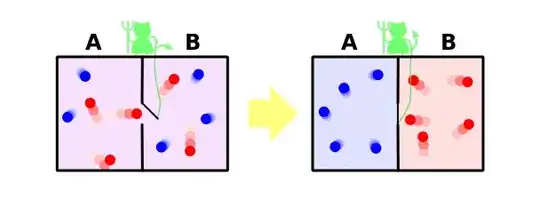
Maxwell's_demon.svg Htkym CC, Wikipedia
– "an imaginary agent which helped sort molecules of different speeds and worked tirelessly in the background."
Else the usage of the word is somewhat in these lines:
daemon: spirit      (polytheistic context)
demon : evil spirit (monotheistic context)
Fix#1:
And as pointed out by the good Mr. @Michael Kjörling, to emphasize:
"Of course, just because the executable's name ends in d doesn't mean it is a daemon."
sed    Stream Editor
dd     Data Description
chmod  Change file mode bits
xxd    Hex Dump
find   Find
etc. are examples of frequently used tools ending in d. Then again that would
not be an added suffix as in sedd.
ls /usr/bin/*d /bin/*d
Though; typically daemons have the letter d appended at the end.
telnet vs telnetd
Another writeup on the subject of *Nix Daemons.


